








The Ultimate Guide to Cochlear Implant Care & Spare Parts

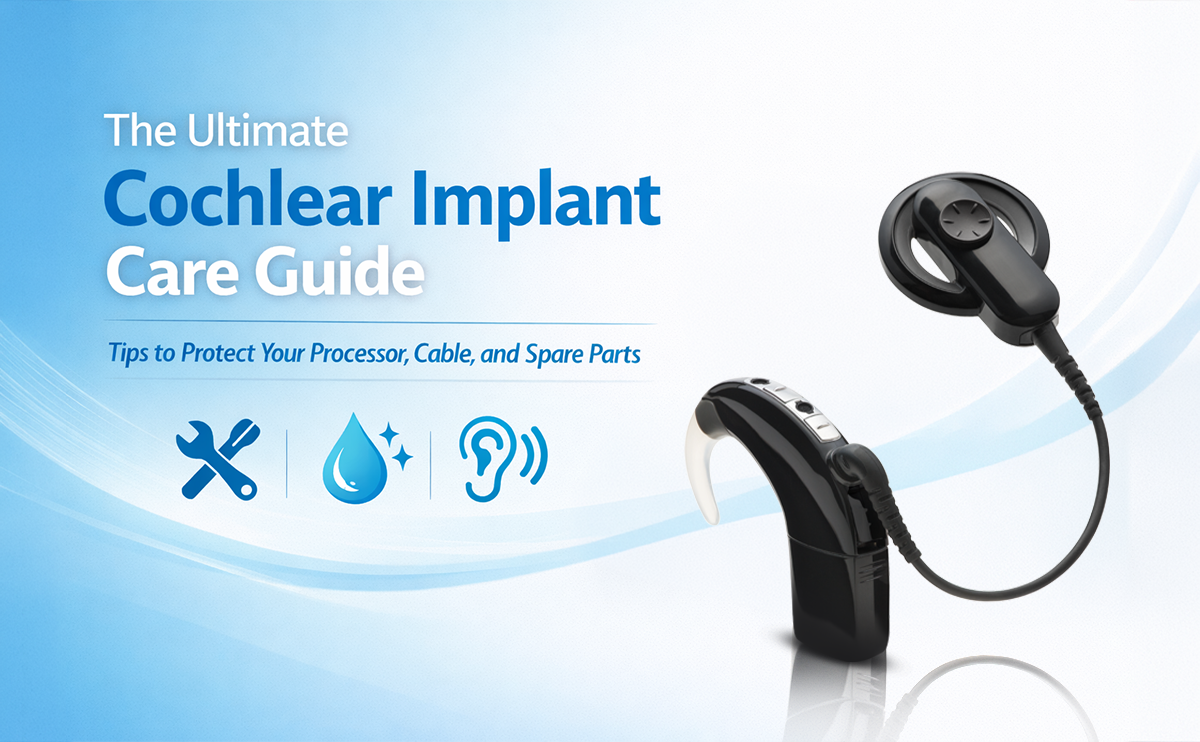
Introduction:
A cochlear implant is more than just a device
it’s a gateway to communication. To ensure your speech processor functions at peak performance, a proactive maintenance routine is essential. Understanding how to handle cochlear implant replacement parts can save you time and money while ensuring uninterrupted hearing.
Cable & Coil Maintenance: Preventing Signal Loss
The cable is the lifeline between the processor and the internal implant.
Never pull the cable by the wire; always grasp the reinforced plastic ends. Avoid tight kinking or wrapping, which can cause internal wire fractures.
Connection Check: Inspect the plug-in points for any signs of corrosion or debris. A clean connection ensures a stable “Lock” signal.
Moisture Management: The Role of Dehumidifiers
Humidity can lead to corrosion of the delicate internal components.
- Daily Drying: Make it a habit to place your processor in a Dehumidifier (Drying Brick/Caddy) every night. This removes accumulated moisture from sweat and humidity.
- Pro-Tip: If the device gets wet, dry it immediately with a soft cloth and place it in the dryer for a full cycle before turning it back on.
Microphone Protectors & Sound Clarity
Clear hearing starts with clean microphones.
Over time, dust and oil can clog the microphone covers. Replacing your Microphone Protectors every 2–3 months is vital for maintaining “Sound Directionality” and noise reduction efficiency.